
.jpg)


05.hai-nyzhnyk.jpg)






_s.jpg "Україна за двадцять років: матеріали міжнародної веб-конференції 22 серпня 2011 р.")


_s.jpg "Банківська система України: виміри глобальної фінансової кризи")
_s.jpg "Нариси історії державної служби в Україні")
_s.jpg "Фінансова політика Центральної Ради та урядів Української Народної Республіки")
_s.jpg "Науково-документальна збірка до 90-річчя запровадження державної служби в Україні")

_s.jpg "Згадуй мене...: Лірика кохання")
_s.jpg "Податкова політика Центральної Ради, урядів УНР, Української Держави, УСРР")
_s.jpg "Фінансова політика уряду Української Держави Гетьмана П.Скоропадського")
_s.jpg "Документальні джерела і матеріали до історії фінансової політики уряду Української Держави")

A diplomat, historian, and political scientist have predicted what will happen to Ukraine in 10 years
24 August 2026
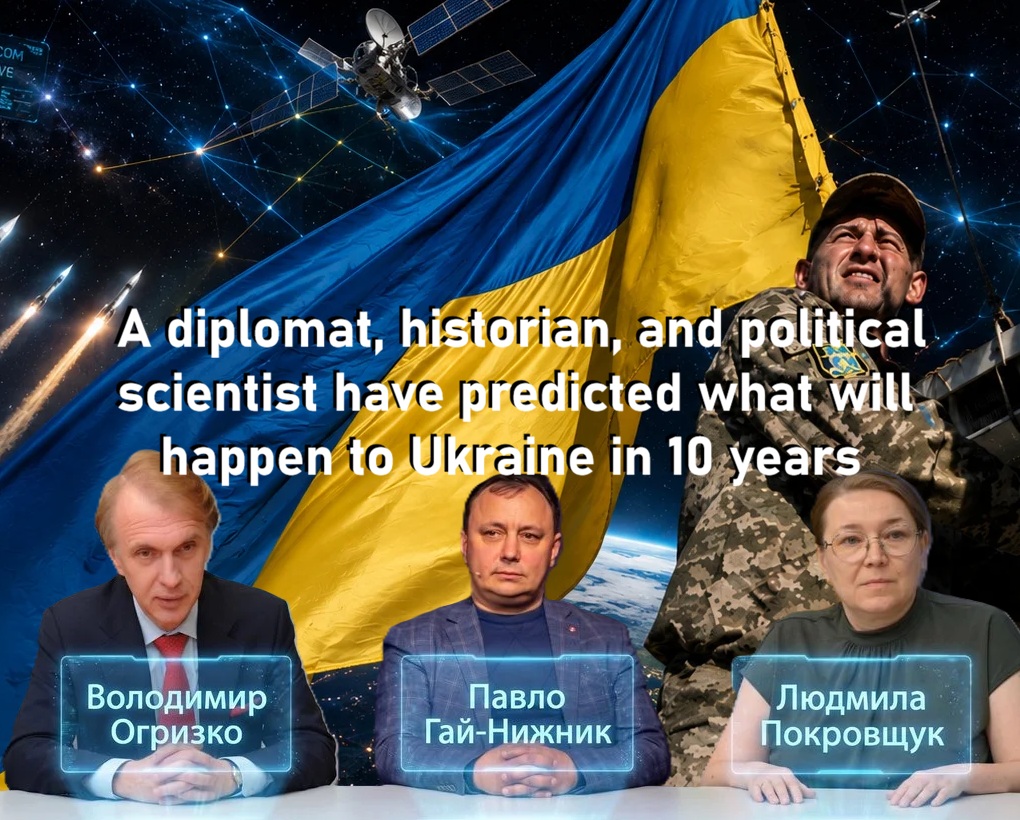
Published: A diplomat, historian, and political scientist have predicted what will happen to Ukraine in 10 years (2026, August 24). Komersant Ukrainian. https://komersant.ua/en/diplomat-istorik-ta-politolog-sprognozuvali-shho-bude-z-ukrainoyu-cherez-10-rokiv/
In its 35th year of independence, Ukraine finds itself at the center of a sweeping reshaping of the world order. It is no longer a mere observer — it is directly shaping the future of Europe. However, alongside recognition of its strength lie the risks of losing the coming “security and technology war.” Leading Ukrainian diplomats, scholars, and experts have outlined the main drivers of this transformation — from the collapse of the Russian Federation to the choice between the “fortress state” concept and the restoration of nuclear capabilities. Details are available in the article "Komersant Ukrainian".
A Place in the World Order: From Shield to Center of Power
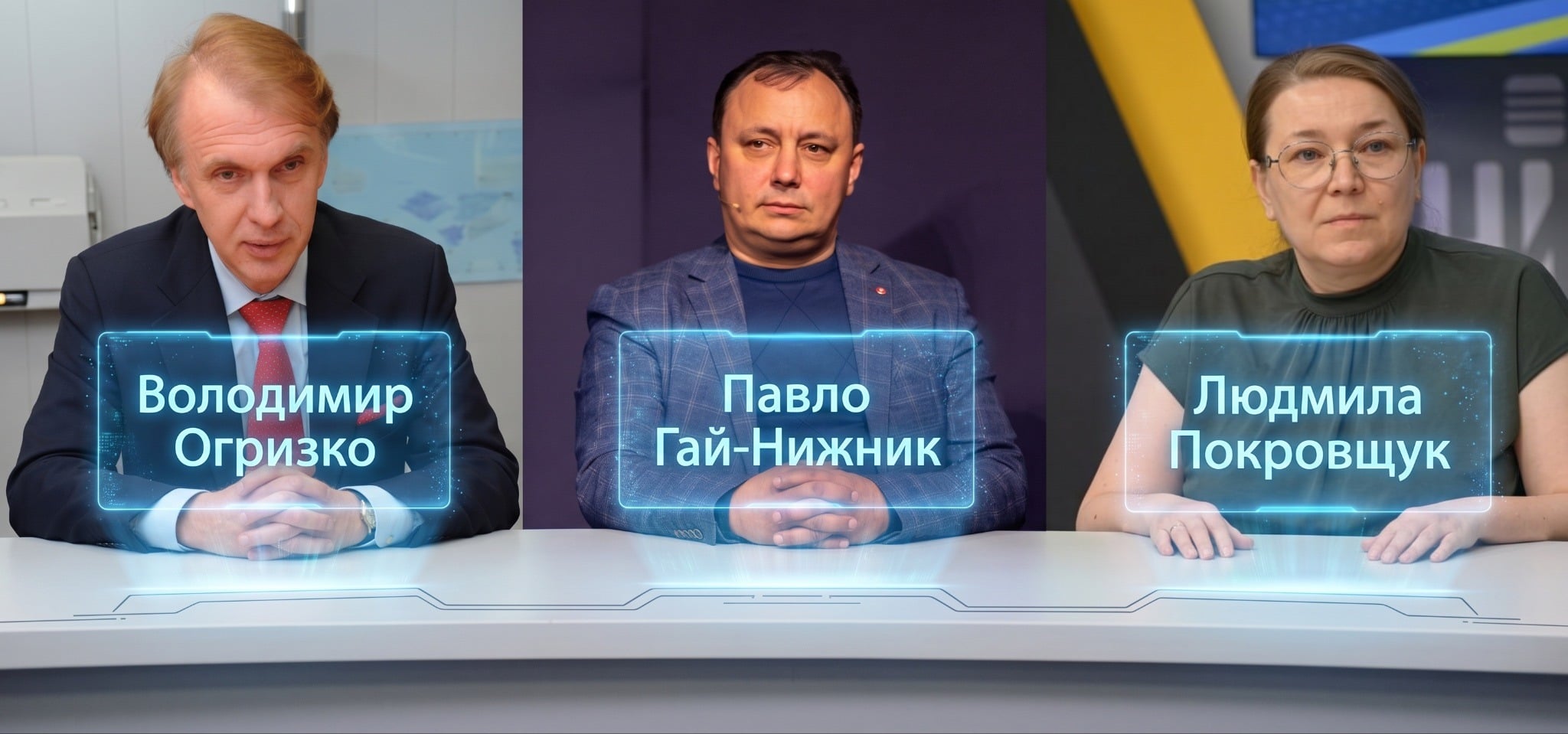
Through the terrible trials of war, Ukraine has finally gained what it had lacked for decades — unwavering agency. This was discussed in an exclusive commentary "Komersant Ukrainian" by Volodymyr Ogryzko, Ukraine’s 8th Minister of Foreign Affairs and head of the Center for Russian Studies.
“Although it came through these horrific trials, Ukraine has finally established its international agency. And this is an agency that no one will ever question again, because it is based on strength,” the diplomat emphasizes.
Ogryzko notes that the modern geopolitical landscape is pragmatic and takes only real power into account:
“Unfortunately, this is the nature of the world — civilized or not — which respects only strength, and Ukraine is precisely demonstrating that strength. I believe that Ukraine will now become a very powerful factor in strength and security, not only regionally but also across Europe,” said Volodymyr Ogryzko.
It is precisely this, according to the diplomat, that opens up positive strategic prospects for our country.
Pavlo Hai-Nyzhnyk, Doctor of Historical Sciences, ideologist, and leading research fellow at the I.F.Kuras Institute of Political and Ethno-National Studies of the National Academy of Sciences of Ukraine, in an exclusive comment "Komersant Ukrainian", draws attention to a complex duality: Ukraine simultaneously holds up the shield of civilization and risks being left on the sidelines of technological progress if it does not make a leap forward in development right now.
“At present, Ukraine occupies a dual position in global geopolitics. On the one hand, we are defending not only our own statehood — we are defending the existential choice of a part of humanity: democracy. We are on the front lines of the fight against the axis of autocrats, the so-called ‘axis of evil,’” the scholar emphasizes.
At the same time, Hai-Nyzhnyk warns that military victory is only part of the story. The main battle lies ahead.
“There is another challenge — the challenge of the future. It involves artificial intelligence, space, and science. The question is whether Ukraine, after victory, will be able to withstand the ‘war without shots fired’ — a cognitive and political war that has been raging within humanity and has no beginning or end. And to meet this challenge of the future, Ukraine will need to make a quantum leap in its development,” says Pavlo Hai-Nyzhnyk.
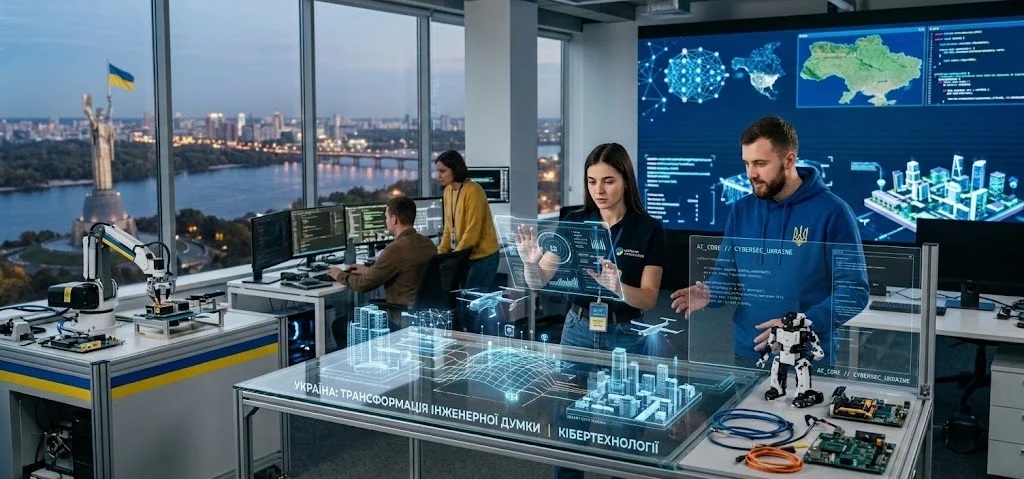
The scientist adds that this applies to physics, a new transformation of engineering thought, cybersecurity, cybertechnologies, and artificial intelligence. Everything must be linked to space technologies, because without science and political awareness, it is impossible to move forward.
Moreover, to avoid becoming a passive pawn in someone else’s game, Ukraine needs a large-scale transformation of engineering thought and cyber technologies.
“Without science and critical thinking, Ukraine risks losing the war against the future and becoming a drifting nation — a ball on the billiard table of global development. We must overcome this dualism: to be at the forefront of the world’s destiny and not slip to the brink of existence,” — Pavlo Hai-Nyzhnyk.
Lyudmyla Pokrovshchuk, a Ph.D. and foreign policy expert, notes that the erosion of international law — which began in 2014 and peaked in 2022 — is forcing Ukraine to rethink its approach to diplomacy and security.
Looking back at the decisions of the 1990s to abandon the nuclear arsenal, the expert emphasizes the lack of strategic thinking among politicians at the time. And the major breakdown of the global system did not occur in 2022, but much earlier.
“In 2014, when Russia occupied Crimea, the security system collapsed completely. All the guarantees that had been given to us lost their validity. From that point on, the UN system, whose charter stipulates that borders must be inviolable, began to break down. And in 2022, a full-scale invasion took place, which ultimately rendered international law meaningless,” notes Pokrovshchuk.
According to Pokrovshchuk, the world no longer has a single arbiter capable of maintaining order. Therefore, amid this systemic chaos, Ukraine has a unique opportunity, since European countries themselves and the NATO alliance lack answers to security challenges and are afraid to put Article 5 to the test:
“Today, Ukraine is laying the foundation for a new European security architecture, because no one understands the conduct of the new technological war of the 21st century better than we do. We must not simply seek our place, but shape it. We’re always wondering, ‘How will our allies view this? How will the Americans view this?’ But they have their own interests, and Ukraine must have its own. We must defend our national interests and not be afraid to say ‘no,’” says Lyudmyla Pokrovshchuk.
What Will Ukraine Look Like in 10 Years: The Collapse of Russia, the Nuclear Triad, and the “Fortress State” Model
The vision for Ukraine’s future is not only a matter of restoring its territorial integrity but also a fundamental restructuring of the entire global security system. Leading Ukrainian diplomats, scholars, and foreign policy experts shared their thoughts on what our country’s geopolitical situation will look like a decade from now.
Volodymyr Ogryzko, Ukraine’s 8th Minister of Foreign Affairs, diplomat, member (academician) of the Ukrainian Academy of Geopolitics and Geostrategy, and head of the Center for Russian Studies, is convinced that the world is on the verge of large-scale geopolitical transformations that will occur much faster than it seems.
“Well, you know, my view is that in the very near future — perhaps even sooner than 10 years — tectonic shifts will occur throughout the North Atlantic region, and primarily in the Eurasian space. These changes will lead to a reshaping of the political geography. As a result, not only will new alliances emerge, but also new states. I’m referring to the territory of the currently existing Russian Federation. It’s quite difficult to predict right now what the future alliances will look like. But it is clear that Ukraine, as part of European civilization, will undoubtedly occupy a very prominent place on this new global political map,” says Volodymyr Ogryzko.
Pavlo Hai-Nyzhnyk, Ph.D. in History and leading researcher at the I.F.Kuras Institute of Political and Ethno-National Studies of the National Academy of Sciences of Ukraine, emphasizes that contemporary global challenges require Ukraine to develop a comprehensive national security strategy, as well as a clear understanding of the possibilities for restoring its nuclear status.
“Today’s challenges, which immediately foreshadow these future threats and challenges… involve comprehensive national security — which is cognitive, that is, intellectual; space-based; military; and industrial… Amid the uncertainty of what is happening among world powers — which have practically transformed the world order into an imperialist system where leading states collude with one another and effectively divide up the world — you cannot remain on the sidelines; otherwise, you will be swallowed up.”
Commenting on the topic of nuclear capabilities and their effectiveness in modern warfare, the scholar notes that the use of nuclear weapons today is possible as a deterrent but impossible as an aggressive defense. We see Ukraine, a non-nuclear country, which has been fighting against a nuclear power for many years and is prevailing — at least for now on the strategic level.
“Modern technologies and scientific innovations in non-nuclear weapons make it possible to deter threats and ensure defense, provided there is internal national political stability, unity among the people, and an adequate understanding of threats by the political leadership. And this speaks precisely to what model of state to build: whether it will be a nation-state — a fortress state that possesses political stability and flexibility in the face of challenges — or a cosmopolitan state that will be guided by the global order and global corporations.”
Lyudmyla Pokrovshchuk, Ph.D. and an expert on foreign and domestic policy, believes that Ukraine has every moral, legal, and technological right to announce the resumption of its nuclear program due to the violation of the guarantees provided to it.
“As of today, we can say with 90% certainty that the guarantees given to us have been violated — and those guarantees were provided precisely on the condition that we would renounce the world’s third-largest nuclear arsenal… In the world, it is the nuclear component that guarantees security. This is because the Russian Federation’s political nuclear rhetoric has normalized the constant sabre-rattling with nuclear weapons in geopolitics,” says Pokrovshchuk.
The expert emphasizes that this is not about developing weapons from scratch, but about restoring previously frozen capabilities:
“We have every legal basis to discuss this, and we also have the technological capabilities to do so. In other words, we’re not saying we’re starting a new program — we’re simply talking about reactivating the program we already had. Any country that has had a nuclear program can put it on hold, and we can resume it. While in the 1990s we were somewhat intimidated by our partners’ harsh political rhetoric, today there is no need to be afraid; rather, we will need to make precisely these statements in due course.”
Thus, Ukraine’s place in the world of the future will not be a gift from international allies — it will have to be fought for and shaped by our own hands. Currently, the state possesses unique experience in waging 21st-century technological warfare and an indisputable moral right to dictate its own terms in the security sphere. However, the main risk of the coming decade lies on the domestic front: will we be able to convert our military resilience into a scientific and engineering “quantum leap”?
Anastasiia Fedor
____________________________


