
.jpg)


05.hai-nyzhnyk.jpg)



_s.jpg "Україна за двадцять років: матеріали міжнародної веб-конференції 22 серпня 2011 р.")


_s.jpg "Банківська система України: виміри глобальної фінансової кризи")
_s.jpg "Нариси історії державної служби в Україні")
_s.jpg "Фінансова політика Центральної Ради та урядів Української Народної Республіки")
_s.jpg "Науково-документальна збірка до 90-річчя запровадження державної служби в Україні")

_s.jpg "Згадуй мене...: Лірика кохання")
_s.jpg "Податкова політика Центральної Ради, урядів УНР, Української Держави, УСРР")
_s.jpg "Фінансова політика уряду Української Держави Гетьмана П.Скоропадського")
_s.jpg "Документальні джерела і матеріали до історії фінансової політики уряду Української Держави")

1940s massacre threatens to tear Ukraine & Poland’s friendship apart
The killings in Volyn are a historical event with serious repercussions for Ukraine’s future. Poland, one of its closest allies, threatens to block Ukraine EU membership unless their demands are met.
SEP 21, 2024
 Posted by: Lastovyria M. 1940s massacre threatens to tear Ukraine & Poland’s friendship apart. The Counteroffensive with Tim Mak. 2024. September 21. URL: https://www.counteroffensive.news/p/1940s-massacre-threatens-to-tear
Today, Ukrainians are widely seen as an example of resistance against war criminals.
Yet, for decades, they have also faced accusations of genocide: many Poles claim that Ukrainians tried to wipe out their nation.
More than 80 years ago, Ukrainian nationalists killed thousands of Poles in the western regions of Ukraine. Sometimes, the killings were indiscriminate. They targeted children, women, the elderly, and other civilians. In retaliation, Poles carried out numerous revenge attacks against the Ukrainian population.
These bloody events, known as the Volhynian Massacre, occurred between 1943 and 1944. During this time, different estimates suggest that anywhere from 35,000 to 100,000 Poles were killed by Ukrainians. Almost 10,000 died on the Ukrainian side. But both sides still haven’t reached an agreement on the real number of victims.
It happened almost a century ago, but these historical events have real world implications for Ukraine’s future – it is a bitter point between two countries that are otherwise close allies due to Russian aggression, and a point of friction that could keep Ukraine out of the EU.
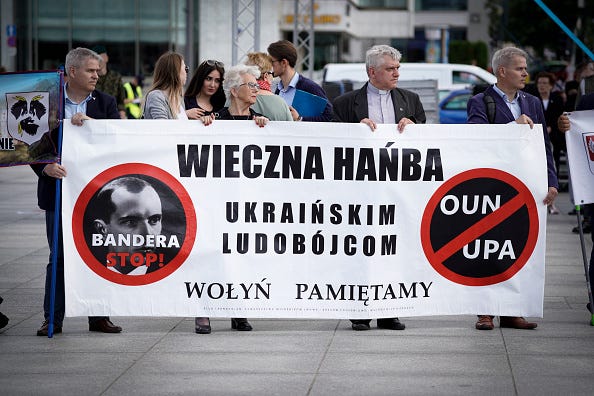
People hold a banner with the words ‘eternal disgrace’ with a photo of Ukrainian nationalist Stepan Bandera during a commemoration service of Polish victims of the Volhynian massacre on July 14, 2019 in Warsaw, Poland. (Photo by Jaap Arriens/NurPhoto via Getty Images)
Since the beginning of the full-scale invasion, Poland has been a reliable partner of Ukraine, sheltering more than 5 million Ukrainians. The Poles have consistently advocated Ukraine's accession to the EU and NATO, and have supported Ukraine with ammunition and weapons since the first hours of the full-scale invasion.
But Polish Prime Minister Donald Tusk said recently that Ukraine would not be allowed to join the EU until it allows “exhuming the victims of the Volhynian Massacre.” And it was a serious cause of tension earlier this week when Polish Foreign Minister Radosław Sikorski visited with Ukrainian President Volodymyr Zelenskyy in Kyiv.
Next year Poland will take over the rotating presidency of the European Union. The country may use Ukraine's aspirations for European integration to pressure Kyiv to resolve the Volhynian issue. Ukraine's future directly depends on its accession to the EU and the support of its Western partners, which may be jeopardized by these deteriorating relations.
In 2016 Poland officially recognized these events, which took place in the Volhynian region of modern-day Ukraine, as a genocide of the Polish population carried out by the Ukrainian insurgent army (UPA).
“Ukraine imposes restrictions on access to the graves of Poles killed in this crime. Although there is no formal ban on exhumation, it is virtually impossible to obtain all the documents, permission to search and remove the remains,” Bartosz Cichocki, former Polish ambassador to Ukraine, told The Counteroffensive.
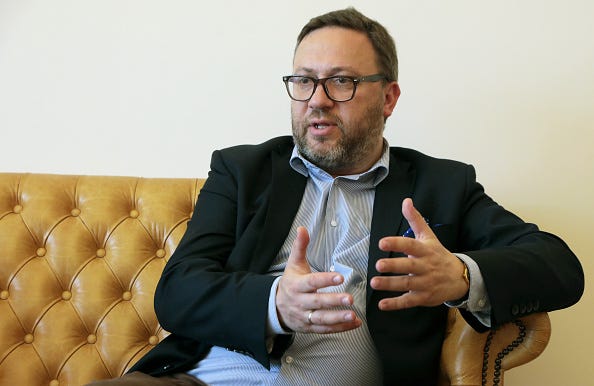
Former Ambassador of Poland to Ukraine Bartosz Cichocki gives an interview to the Ukrinform Ukrainian National News Agency (Photo by Hennadii Minchenko/ Ukrinform/Future Publishing via Getty Images)
He was the only EU ambassador who did not leave Kyiv when Russia launched a full-scale invasion and other countries were evacuating their representatives en masse to their homelands. Cichocki decided then that such a gesture would demonstrate Poland's unwavering support in the war against Russia. It would also signal to other countries not to fear coming to Ukraine. During his diplomatic mission, which lasted until 2023, Cichocki coordinated the provision of military and humanitarian aid to Ukraine from Poland.
In the first months of the full-scale war, Poland became a refuge for millions of Ukrainians, as well as a hub for the supply of weapons to Ukraine.
But the ghosts of the bloody past still haunt both countries.
“After Russia's full-scale aggression, it was much easier for me to talk to Ukrainians about the Volhynian massacre, because the suspicion that the Poles were profiting from using these things to achieve hidden goals disappeared,” the Polish diplomat claimed. “But this period of trust is over.”
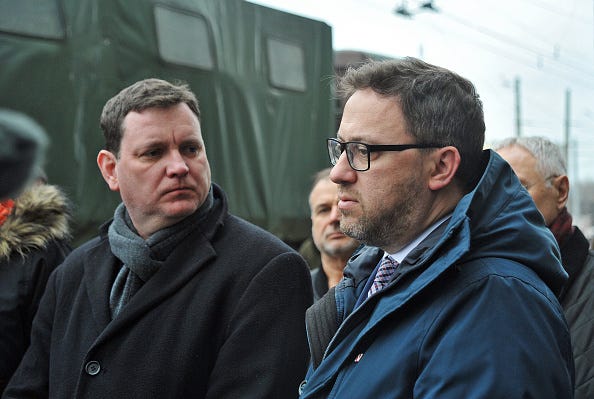
Ambassador of the Republic of Poland to Ukraine Bartosz Jan Cichocki attends the handover ceremony of humanitarian assistance sent to eastern Ukraine (Photo by Kovalyov Oleksiy/ Ukrinform/Future Publishing via Getty Images)
Ukraine does not recognize the killing of Poles in Volhynian as genocide. Ukrainian historians tend to interpret this period as ‘ethnic cleansing.’ This is also a serious war crime, but it is of a different nature. Genocide, as defined by the U.S. Holocaust Memorial Museum, includes acts that are committed to destroy – in whole or in part, a national, ethnic, racial or religious group; whereas ethnic cleansing seeks to expel that group from a particular territory.
Ukrainian historians, like Pavlo Hai-Nyzhnyk, also argue that the events in Volhynian should not be viewed in isolation, but rather within the broader context of the historical conflicts of the interwar period. After the First World War, at the Paris Peace Conference in 1919, Poland guaranteed the Ukrainian population autonomy within the modern western Ukrainian territories that were then part of it. This included the formation of local governments and the right to use the Ukrainian language.
However, this approach was quickly reversed. Poland curtailed democratic institutions. They banned the use of the word ‘Ukraine’ or ‘Ukrainian’ and replaced it with ‘Rusyn’ which was used to refer to East Slavic peoples in general.
Education in the Ukrainian language became impossible. In addition, in the 1920s Poland massively resettled its citizens to western Ukrainian lands. About 300,000 Polish officers, war veterans and ordinary Poles took the opportunity to get land in Volhynian.
Ukrainians resisted these policies.
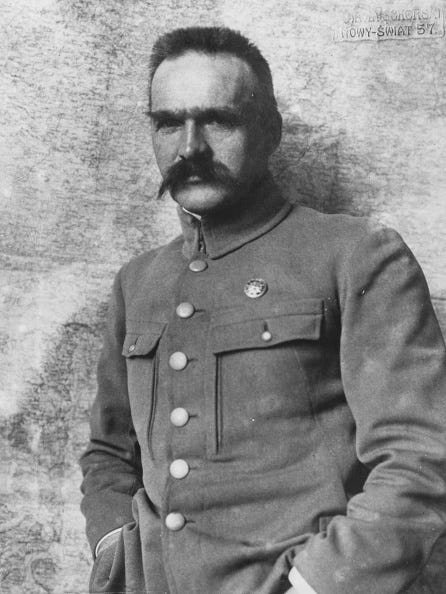
Portrait of Polish Prime Minister Jozef Pilsudski in uniform, 1927. (Photo by Central Press/Hulton Archive/Getty Images)
In 1930, at the initiative of Polish statesman Józef Piłsudski, ‘pacification,’ which means ‘reconciliation’ in Latin, was introduced to suppress liberation sentiments. It was an open policy of repression against the Ukrainians, who were subjected to mass beatings, arrests, rape, and destruction of private and public property.
In addition, the Poles attempted to forcibly convert the historically Orthodox Ukrainians to Catholicism. At that time, the Poles not only agitated for a religious shift, but also burned and destroyed the majority of Ukrainian churches in several regions, according to the historian Pavlo Hai-Nyzhnyk.
Cichocki does not deny the crimes committed by the Polish side, especially by the Polish army, which in turn organized terror against the Ukrainian population.
But, like other Poles, Cichocki demands that Ukraine recognize the crimes of the UPA and Ukrainian nationalist leaders.
“The policy towards national minorities in the Second Polish Republic was a failure. Today, no one erects monuments or glorifies these mistakes… We are not responsible for what our ancestors did. What matters is how we deal with it today,” Cichocki remarked.
Following the full-scale Russian invasion of Ukraine, glorifying the Ukrainian Insurgent Army and leading Ukrainian nationalists became part of Ukrainian politics.
They were the ones who laid the groundwork for and fought for Ukrainian independence during Nazi, Soviet, and Polish occupations of Ukraine. Ukrainian society now rallies around these images to symbolize its struggle for freedom.
The Polish people have a very negative attitude towards this. Even though the UPA was initially fighting against Poles who collaborated with the Nazis, they later began attacks on ordinary peasants.
“Because of Poland's repressive policy toward Ukrainians and the Church, Ukrainian youth became radicalized. And this left its mark on subsequent events,” Ukrainian historian Pavlo Hai-Nyzhnyk told The Counteroffensive. “But as for the events in Volhynian, we will not see any orders from the Ukrainian insurgent army to terrorize the civilian population.”
However, Polish historian Grzegorz Motyka suggests that the decision was made during a meeting in the fall of 1942, held by Ukrainian military officials, where they resolved to eliminate Polish community leaders and anyone who resisted.
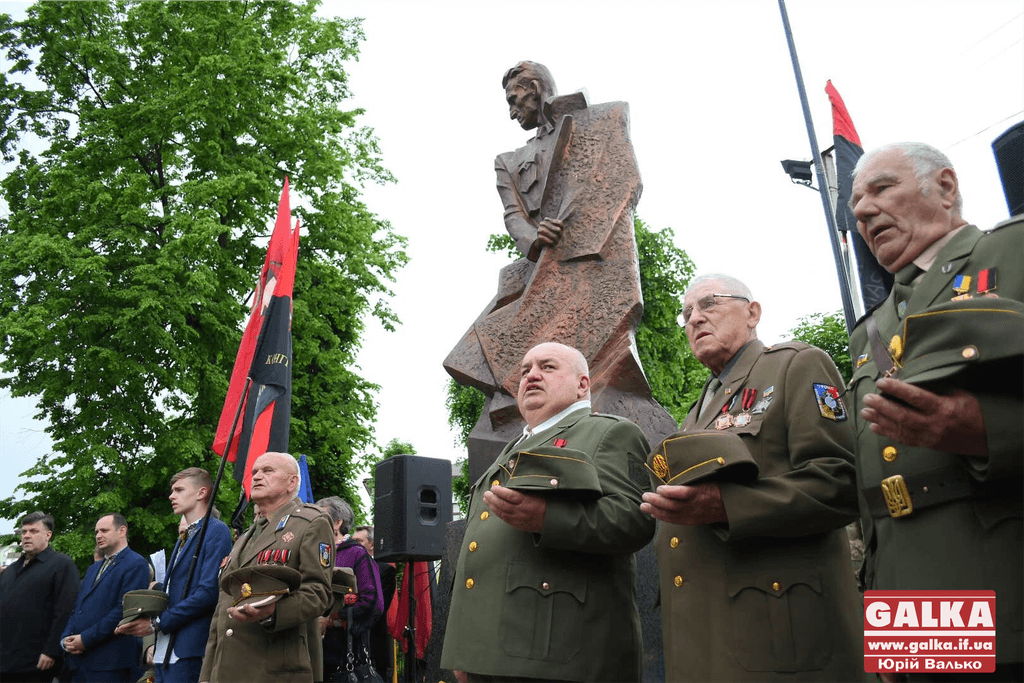
Monument of UPA’s leader, Roman Sukhevych, 2019. Source: https://galka.if.ua/
Polish diplomat Bartosz Cichocki is categorically opposed to the glorification of the UPA. He was always against the unveiling of monuments and the naming of streets in honor of Ukrainian nationalists.
In particular, two years before Russia's full-scale invasion, in 2020, Cichocki issued a joint statement with the Israeli ambassador against the erection of a monument to UPA leader Roman Shukhevych, who was accused of anti-Semitism and extermination of Poles. The Ukrainian Foreign Ministry summoned Cichocki over the incident.
But like other Poles, Cichocki remains steadfast.
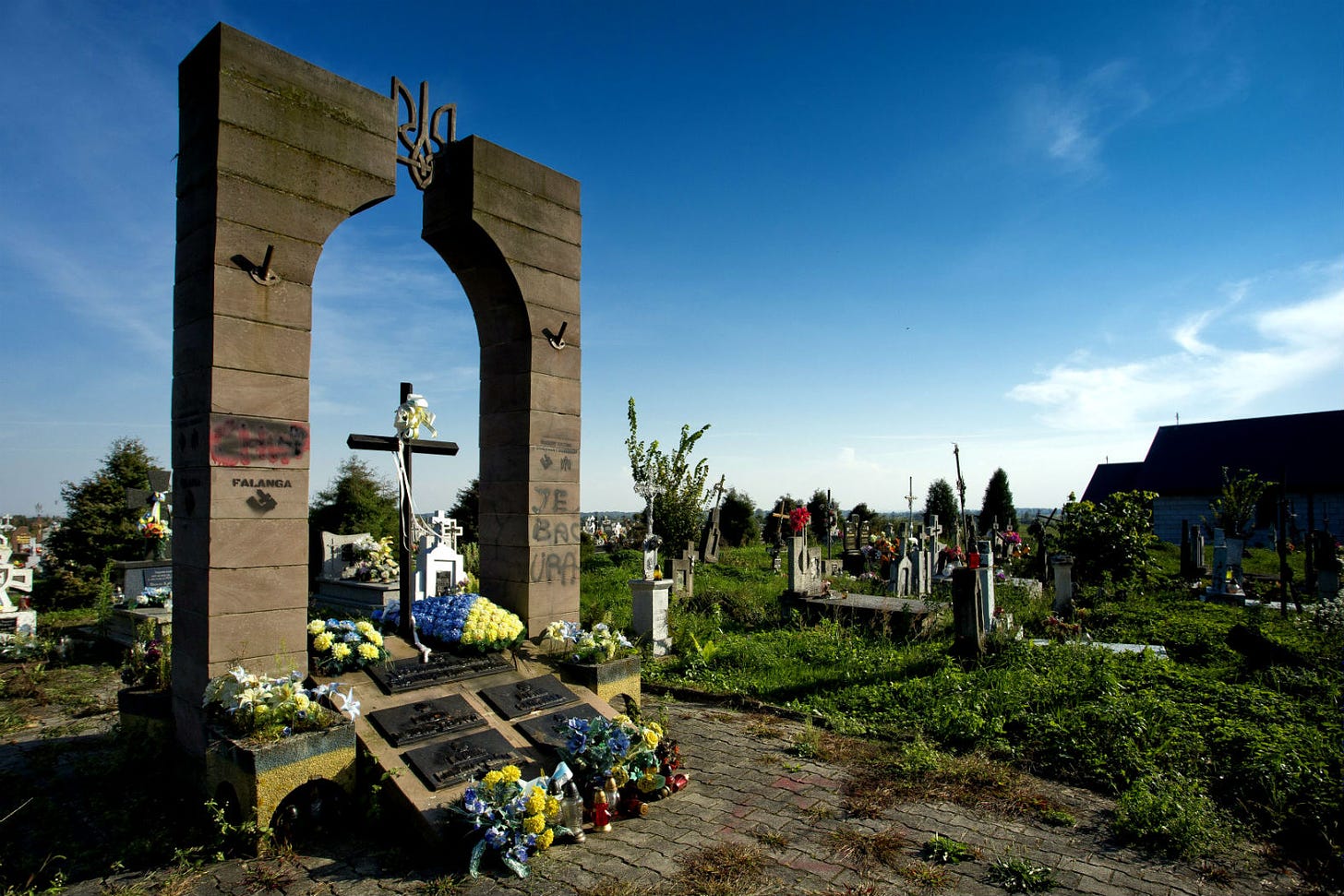
Monument to Ukrainian insurgent army, Hruszowice, Poland. Photo by Waldek Sosnowski/Forum
Poles continue to insist that the Volhynian tragedy was a Ukrainian-coordinated action to kill Polish civilians. In 2016, when the Polish government declared the events of 1943-1944 a genocide, a wave of vandalism of Ukrainian monuments swept across Poland. In particular, in 2017, a Ukrainian monument honoring the UPA was demolished in the Polish village of Hruszowice. As a result, Ukraine banned the search and exhumation of Polish remains.
The Poles request for exhumations are aimed at determining the exact number of victims of the Volhynian tragedy, so they are increasingly raising this issue.
The Ukrainian side, however, refers to the Memorandum on Cooperation in the Field of National Memory between the Ministries of Culture of the two countries, signed in June 2022. This document is an agreement between the parties on exhumation. A Polish-Ukrainian working group with experts from specialized institutions of both countries will be established within its framework. Due to the danger of attacks, the memorandum allows exhumations to take place three months after the end of martial law in Ukraine.
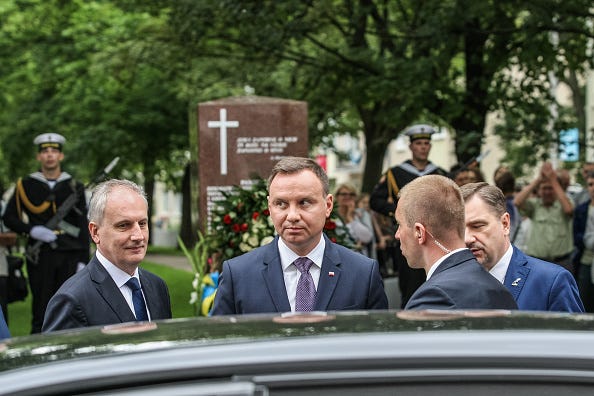
President of Poland Andrzej Duda visits Gdansk to lay flowers and pray undser the Massacres of Poles in Volhynia and Eastern Galicia victims monument. (Photo by Michal Fludra/NurPhoto via Getty Images)
“No one is hiding the fact that the issue of the Volhynian tragedy, which is being discussed again, is linked to Ukraine's accession to the EU. This is political blackmail, and it's not fair, both politically and ethically,” Ukrainian historian Pavlo Hai-Nyzhnyk told The Counteroffensive.
According to Hai-Nyzhnyk, the Volhynian tragedy will remain a springboard for manipulation for some time to come, as the issue has become too politicized.
Instead, professional historians should deal with the issue to finally arrive at a common vision of the past.
Cichocki disagreed.
“There's no need to say ‘let's leave history to historians.’ No, the economy is not left to economists, health care is not left to doctors. The past and identity are what everyone is concerned about today,” Bartosz Cichocki said.


